
Is it the heat? The hard water? Or is your hair just... done?
When you start seeing more hair on your brush than you want to admit, or those annoying little flyaways that break halfway through the strand, you are not dreaming.
One of the most widespread and most misconceived hair issues is hair breakage, which is particularly an issue with Indian hair trying to cope with the daily stresses of heat, humidity, hard water, and a timeline that never slows down.
The point is, hair breakage is not accidental. It's a signal. And when you know what is really bringing it about, then it becomes a good deal more strategic to prevent.
Here in this guide, we break down what causes hair breakage and how to prevent hair breakage with a system that works long term.
What Is Hair Breakage: And How Is It Different From Hair Fall?
Before going further, it helps to get clear on what you’re actually dealing with, because hair fall and hair breakage are often confused, but they’re not the same problem.
So, what is hair breakage?
Hair fall occurs at the root. The strand is peeled off the follicle, and typically has a tiny white bulb at the end. It is a natural cycle of your hair and can be accelerated by stress, nutritional or hormonal shifts.
Hair breakage, in its turn, occurs along the length of the strand. The hair breaks at the weakest spot- usually because of structural damage- and leaves behind dishevelled ends or shorter strands that do not blend with the rest of your hair.
Both are very real issues, yet they have various causes and need various solutions. When you find pieces of your pillow short and broken, or your hairbrush without a root, that is breakage. And that’s what we’re talking about today, especially if you’ve been wondering, why is my hair breaking off.
The Real Causes of Hair Breakage
1. Structural Damage to the Hair Shaft
Each strand of hair consists of three layers: the medulla, cortex and cuticle. The outermost protective layer is the cuticle, the overlapping scales that retain the moisture in and protect the outside.
When the scales tear or open due to heat, chemicals, or mechanical forces, the cortex is exposed, the proteins escape, and the strand becomes so weak that it breaks under the pressure of the smallest force.
This is at the core of most hair breakage causes.
2. Heat Styling Without Adequate Protection
Straighteners, curling irons, and even the blow dryer all work by temporarily altering the hydrogen bonds in your hair.
Do it repeatedly without a buffer, and you're progressively weakening the internal structure of each strand. Indian hair, which tends to be denser and often coarser, can handle heat, but not unprotected heat, day after day.
3. Hard Water and Environmental Stress
This is one of the most overlooked causes of hair breakage. Water in India is infamously rich in minerals calcium, magnesium and chlorine, and they are not simply lying on the surface. They attach themselves to the hair shaft, coarse the cuticle, and in due course lead to the type of brittleness which cannot be fixed on the surface by any amount of oil. Factor in pollution and UV rays, and your hair is more or less besieged on a daily basis.
4. Hygral Fatigue: Too Much of a Good Thing
Yes, there is such a thing as over-moisturising. When the hair takes in excess water too often (particularly low-porosity Indian hair that does not give up water easily), it swells and contracts with each wash cycle. This mechanical stress causes the protein structure to become weak, which causes a particular type of breakage. Hair becomes limp and easier to snap when wet. The fix is not the lack of moisture; it is equal moisture that is held together by proteins.
5. Rough Handling When Wet
Wet hair has significantly strength than dry hair. Combing aggressively from root to tip, wrapping it tightly in a terry cloth towel, and tying it up immediately after washing, all of these create mechanical stress on hair that's at its most vulnerable. This is especially true for chemically treated or already-damaged hair.
6. Nutritional Deficiencies
When you're low on iron, biotin, zinc, or protein, your body diverts those nutrients to more critical functions. Hair, being non-essential tissue, gets the shortfall and weakens from within. Breakage caused by nutritional deficiency tends to be diffuse, affecting strands across the scalp rather than concentrated in one area.
7. Over-Processing and Chemical Treatments
Bleach, colour, keratin treatments, and relaxers alter the disulfide bonds in the cortex that give hair its structural integrity. Done carefully and supported with the right aftercare, your hair can handle them. Done frequently, or without proper recovery time, they leave bonds permanently compromised and strands perpetually brittle.
How to Prevent Hair Breakage: Long Term
Prevention isn't about doing more. It's about doing the right things consistently.
-
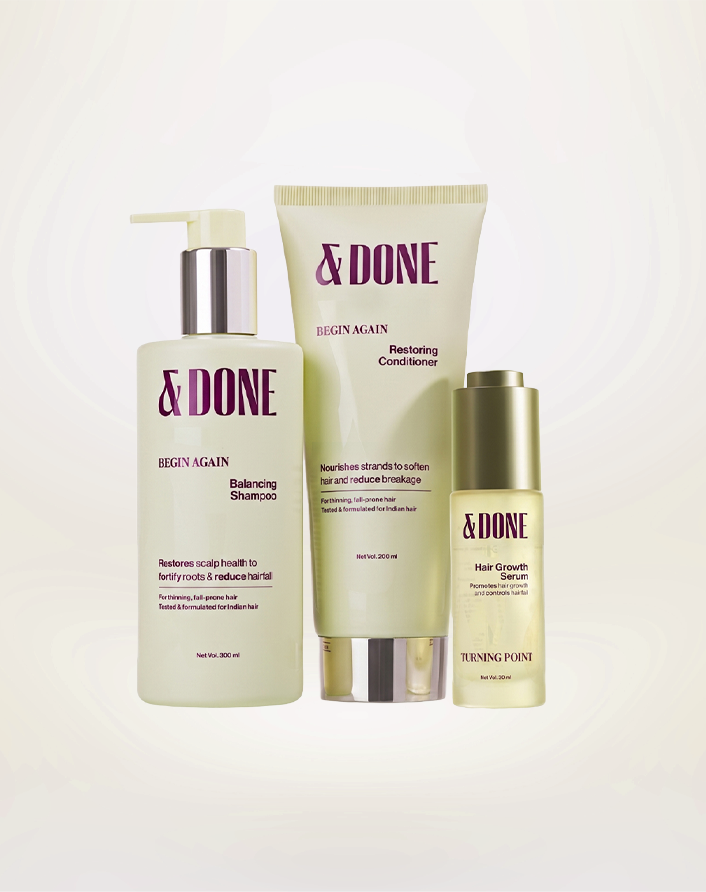
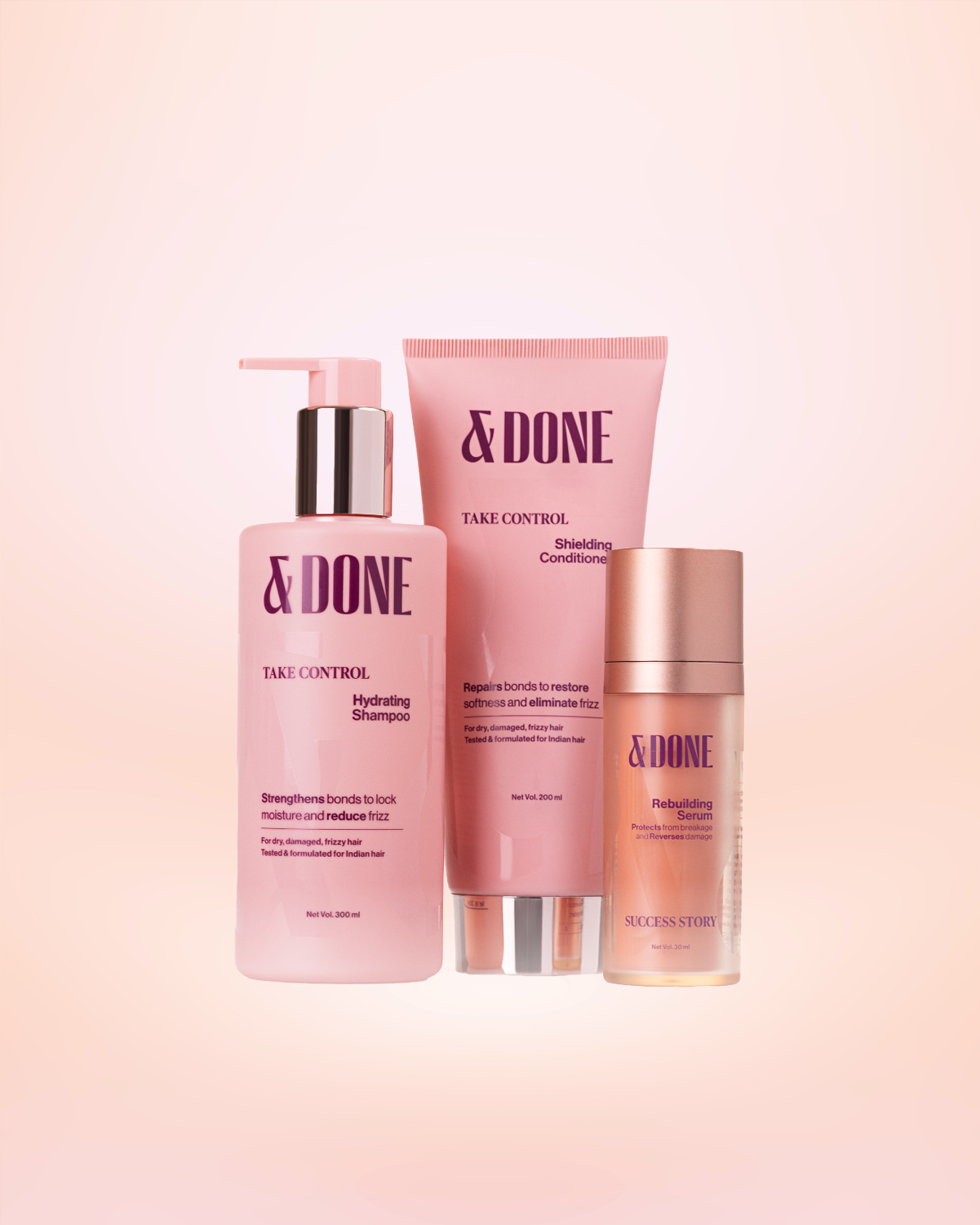
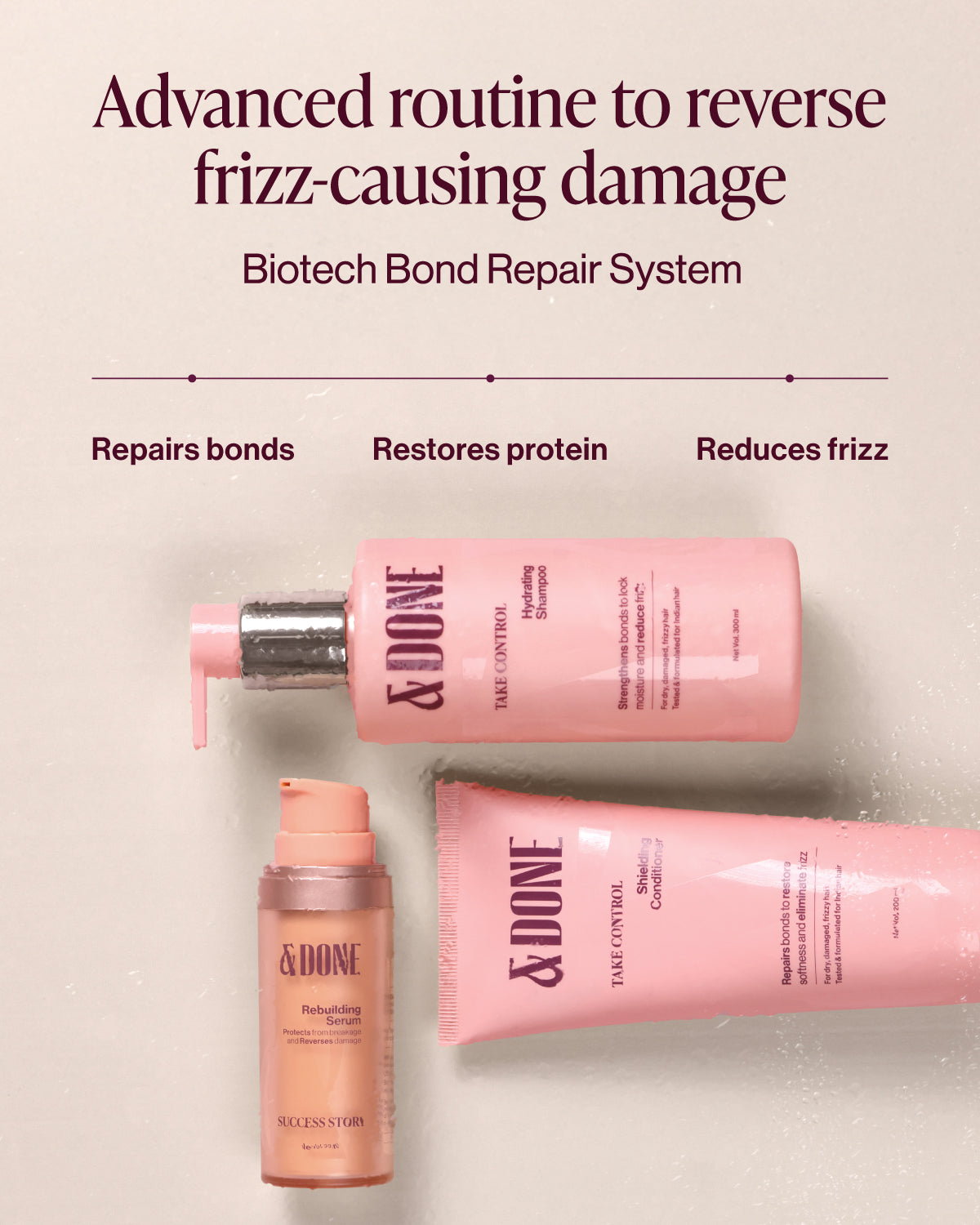
Start with your foundation wash routine. A hydrating shampoo formulated for Indian hair, one that cleanses without stripping, is the non-negotiable first step. Breakage often starts with a disrupted moisture balance, and that begins in the shower. Follow it with a hair conditioner that rebuilds the cuticle and seals it, not just one that adds slip temporarily. If you're not already using a shampoo and conditioner combo designed to work together as a system, you're missing the compounding benefit of actives that are formulated to complement each other.
-
Address the protein-moisture balance. Healthy hair needs both. Lean too far in either direction, and you'll see breakage. If your hair feels mushy or stretchy when wet, it needs protein. If it feels brittle and snaps with zero stretch, it needs moisture. Understanding where your hair sits on this spectrum is what separates reactive care from genuinely preventative care.
-
Use heat with a plan. Lower temperatures, slower passes, and a heat protectant that actually forms a barrier, not just a coating. Your hair will thank you for not rushing.
-
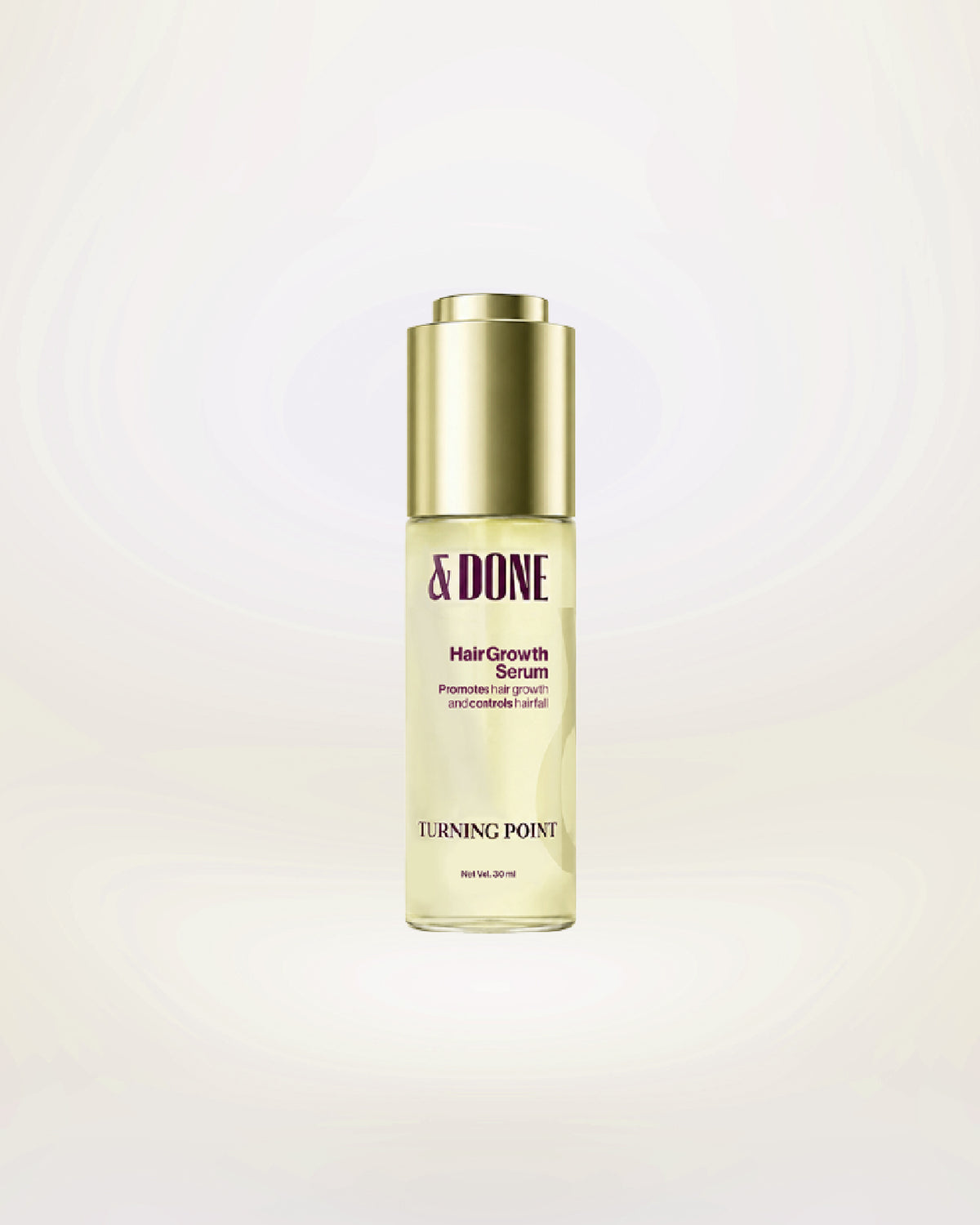
Add a hair serum to your routine. Post-wash, a serum for hair that targets cuticle sealing and strand integrity is one of the most underrated steps for preventing breakage. It works in the spaces the rinse-off products can't, locking in what you've put in and creating a layer of protection against friction and environmental exposure throughout the day.
-
Handle hair gently, especially when wet. Microfibre towel over terry cloth. Use a wide-tooth comb before a brush. Detangle from the ends upward. These aren't complicated changes, but they reduce the mechanical damage that quietly accumulates over time.
-
Look at your routine with honest eyes. Ingredient lists matter. Sulfates, drying alcohols, and high fragrance loads can all contribute to chronic breakage by disrupting the cuticle repeatedly. Switching to hair care products that actively support your hair's structure, rather than just masking damage with silicone, is a long-term investment that pays off, and a key step in understanding how to stop hair breakage.
The Bottom Line
Honestly, hair breakage isn't about bad luck or bad genes. It's about an imbalance somewhere in the system, whether that's the products you're using, the environment you're in, or the way your hair is being handled.
The good news: once you understand the cause, the fix becomes straightforward. Identify the weak point, address it systematically, and give your hair the tools to actually rebuild, not just look better temporarily.
That’s really how to prevent hair breakage comes down to, understanding, then acting with intention.
Your hair works hard. The care behind it should too.