
You finally got the colour right. The colour, the polish, the manner in which it reflects the light. And then, two weeks later, it begins to appear dull, dry, and not at all like it was when you left the salon.
Sound familiar? You’re not doing anything wrong. You’re just missing a system, and understanding how to protect colored hair is where that system begins.
It's one of the most common frustrations with colour-treated hair, and it's not always about how good your stylist is. It's about what happens after you leave the salon. The wrong routine strips your colour faster than any rinse cycle, and most people don't realise it until they're standing under harsh bathroom lighting, wondering why their balayage looks brassy already.
Here's the truth: hair care for colored hair isn't complicated, but it is specific. Once you understand what color-treated hair actually needs, and what quietly destroys it, you can hold your colour for weeks longer, with significantly more shine and softness.
Here's exactly how to do it.
What Is Color Treated Hair, and Why Does It Behave Differently?
Color treated hair is any hair that has undergone a chemical process, permanent color, highlights, balayage, toning, or bleaching. During this, the cuticle (outer layer) is lifted so dye can penetrate the cortex.
The result is beautiful color, but hair that is now:
-
More porous, loses and absorbs moisture quickly
-
Weaker, rougher cuticle, more prone to breakage
-
More reactivem sensitive to heat, UV, chlorine, and hard water
This is exactly why how to take care of colored hair isn’t about occasional fixes. It requires a more considered, consistent approach, one that supports the structure of your hair, not just its surface.
1. Switch Your Shampoo: This Is Non-Negotiable
The single biggest reason colour fades too fast? Harsh sulphates. They disrupt the cuticle, pulling out colour molecules along with the buildup they're meant to remove.
What you need is a mild shampoo, sulphate-free or low-sulphate, with a pH between 4.5–5.5. An acidic environment keeps the cuticle sealed and colour molecules locked in.
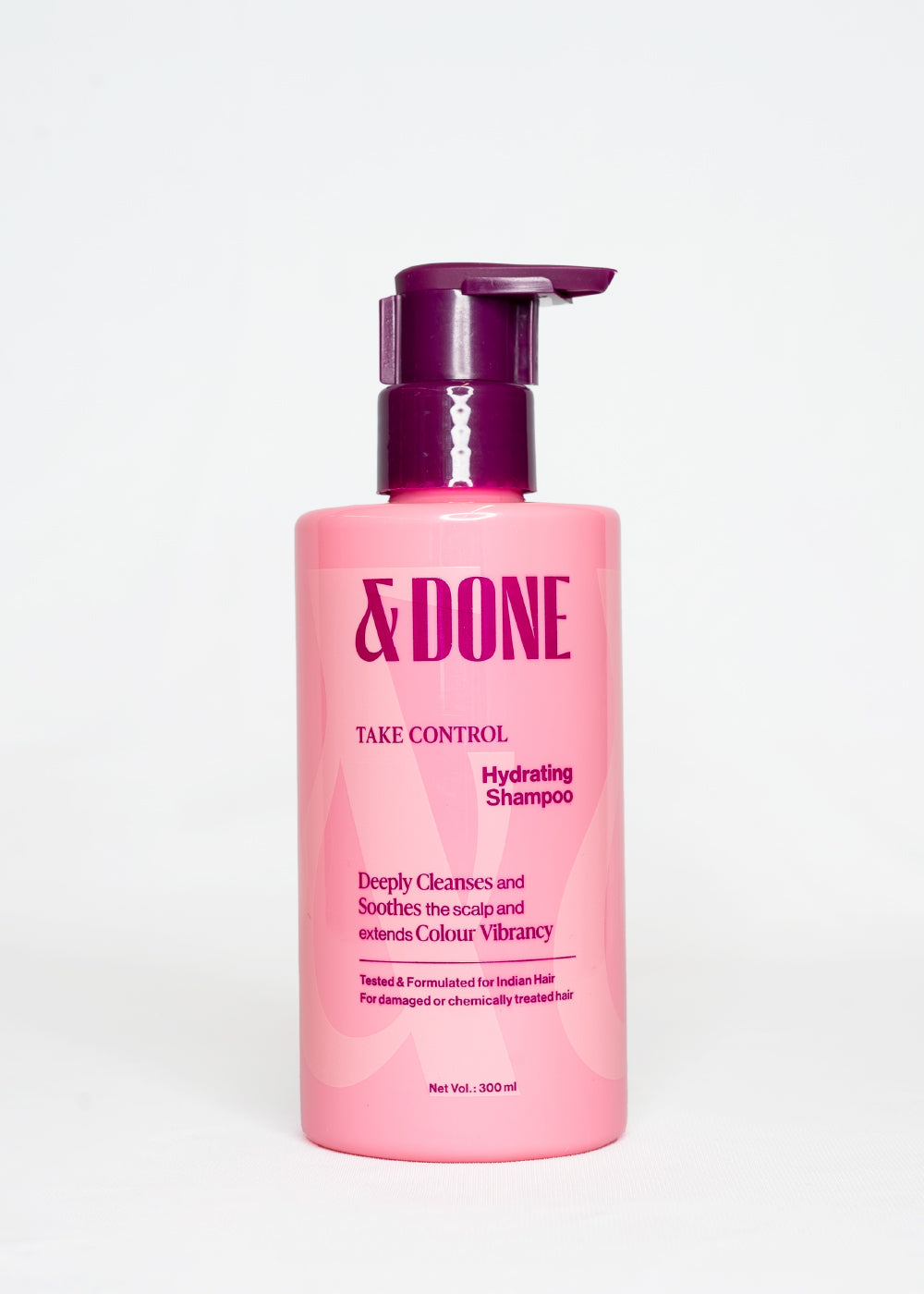
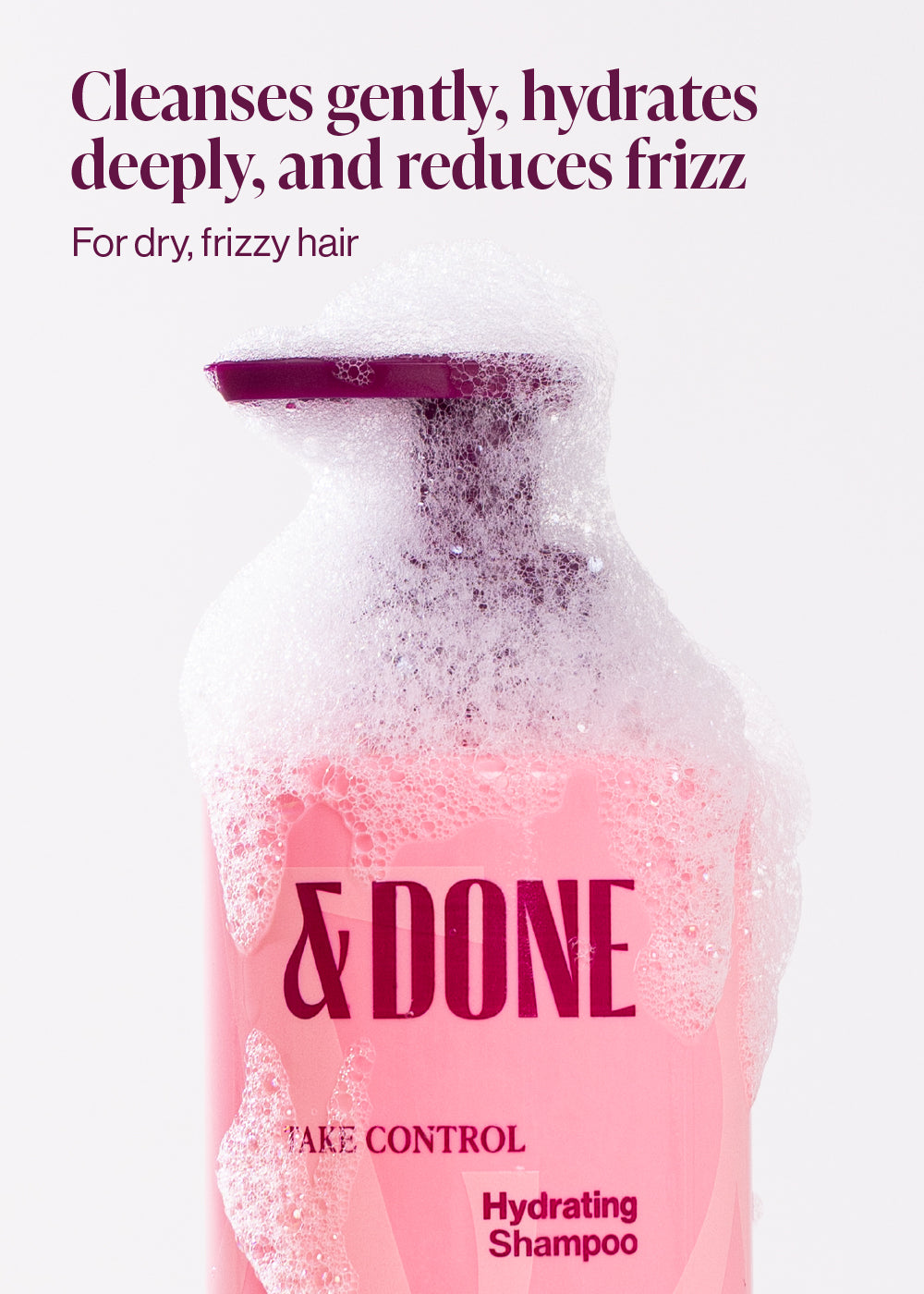
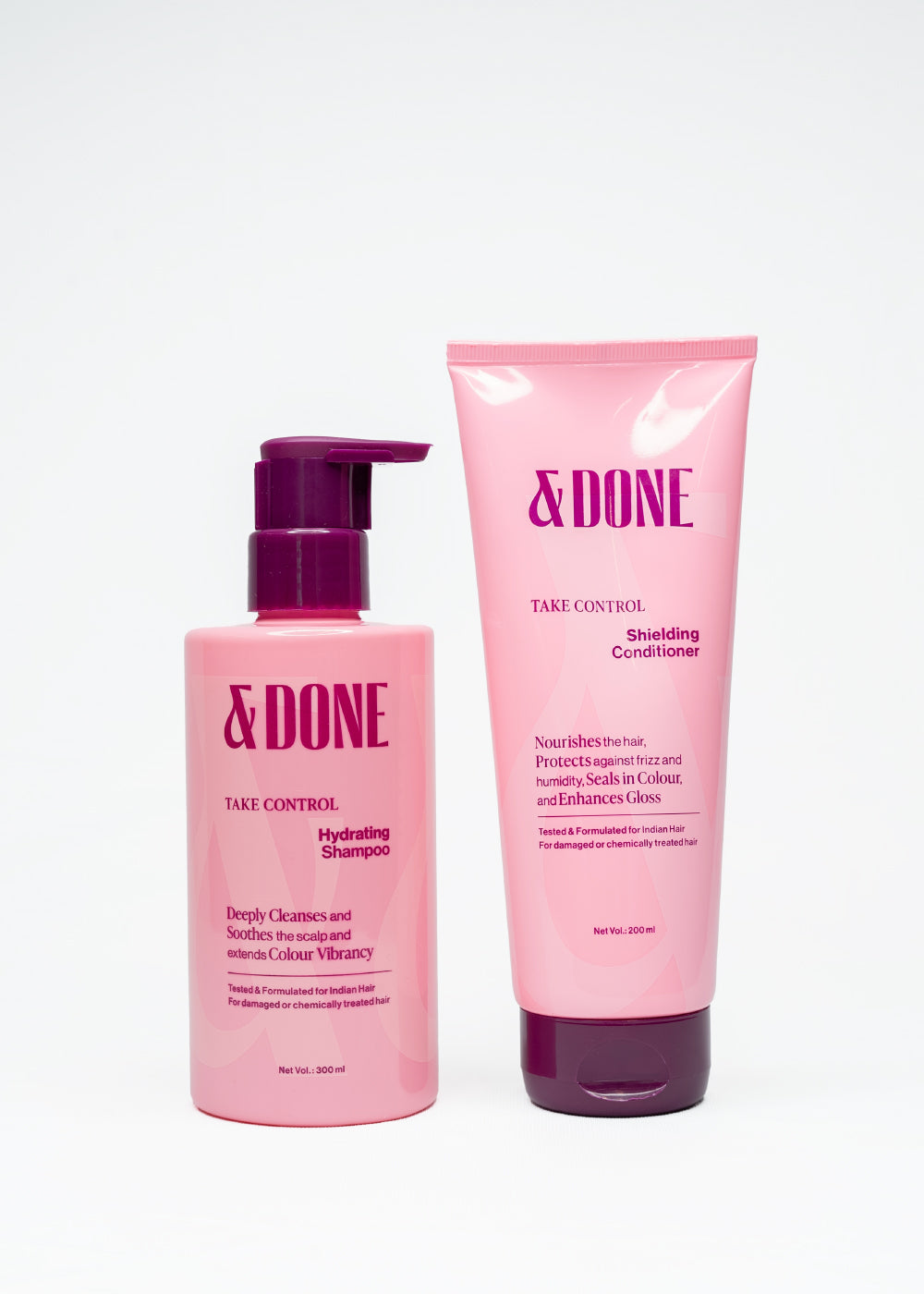
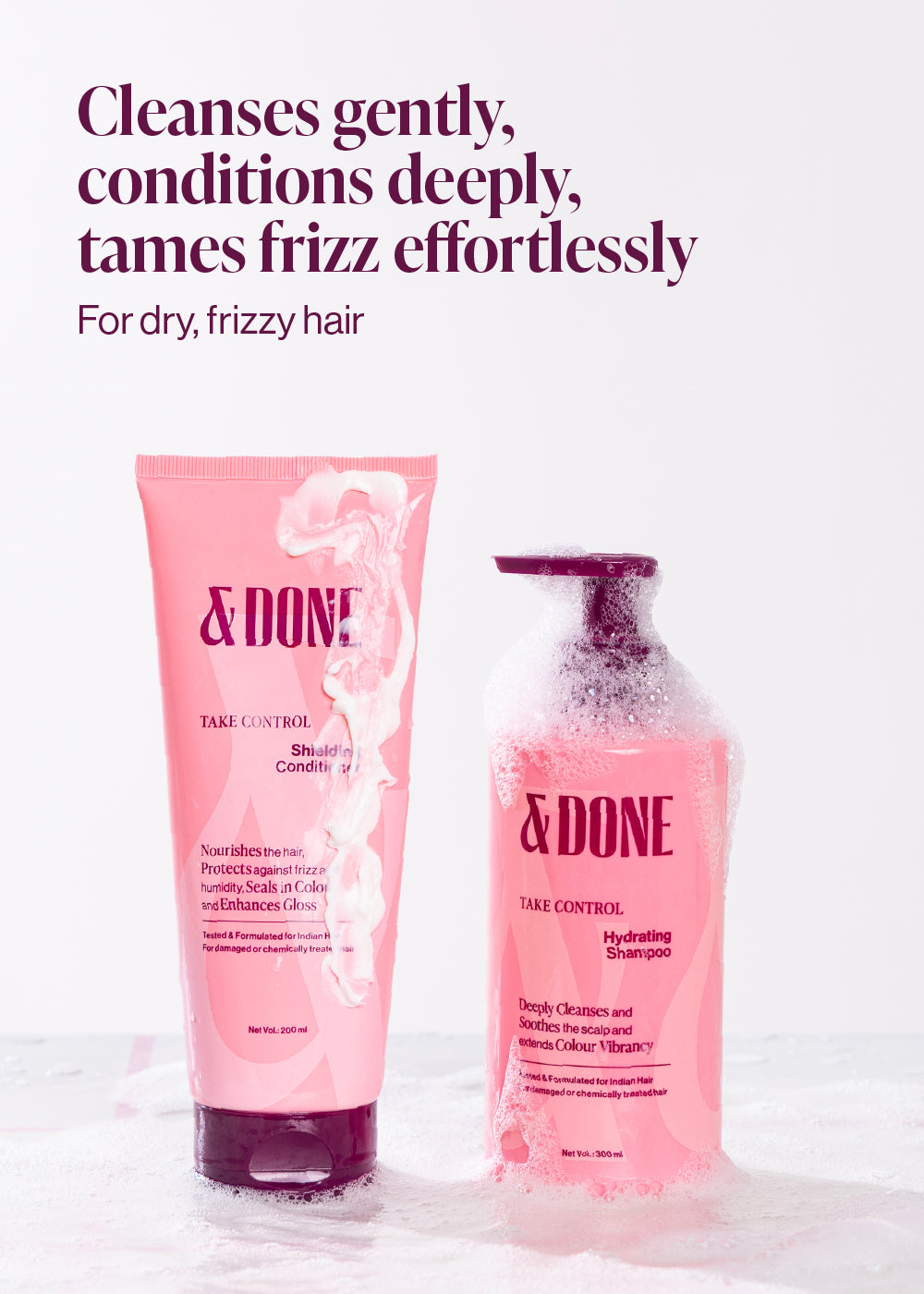
&DONE's hydrating shampoo goes a step further, it doesn't just cleanse gently, it actively replenishes moisture into the hair fibre with every wash. For Indian hair already dealing with hard water minerals and humidity, that two-pronged approach matters.
One more thing: wash 2–3 times a week, not daily. Every wash is a cuticle event. Fewer washes, longer-lasting colour.
2. Condition Every Single Time: And Choose Wisely
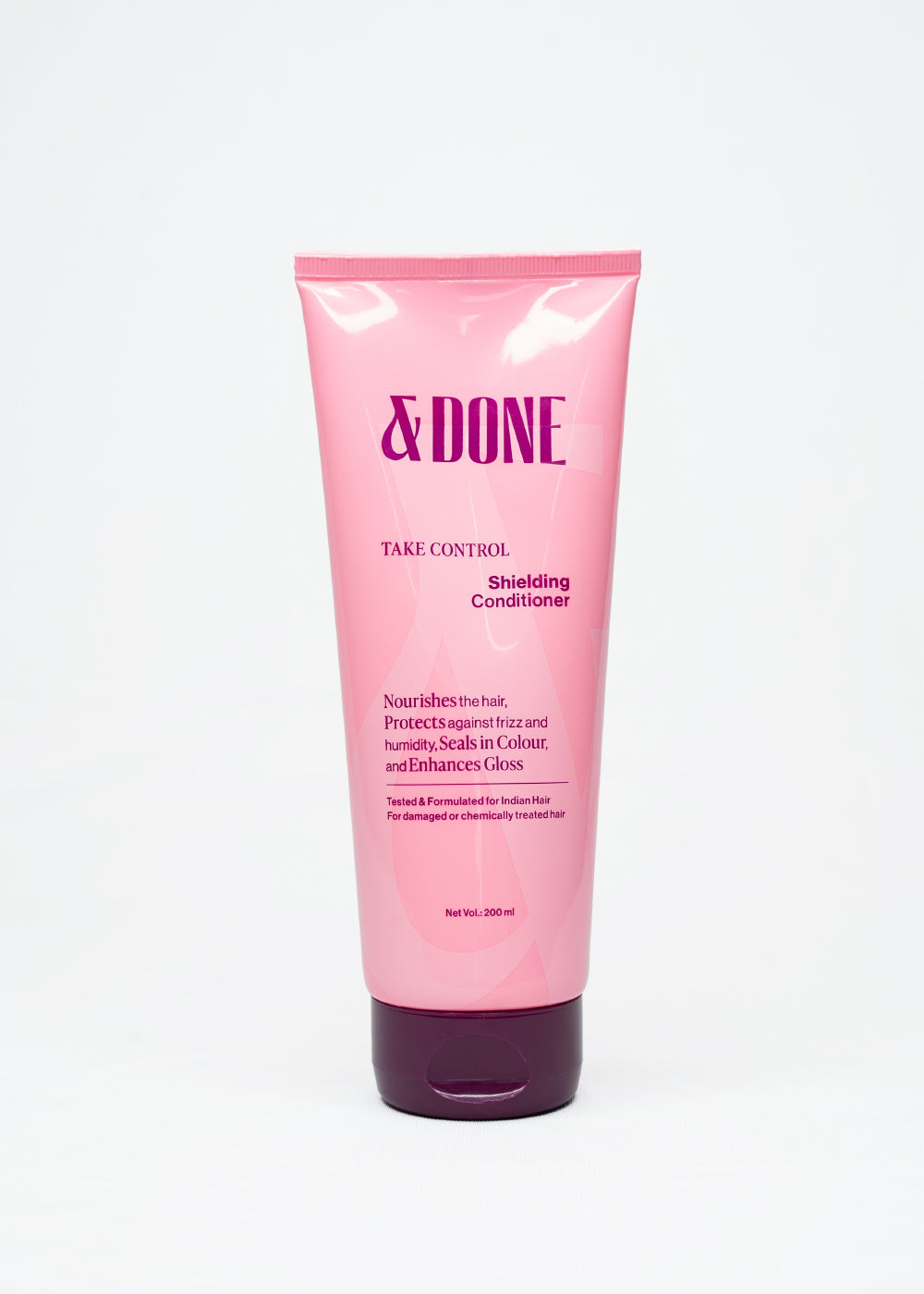
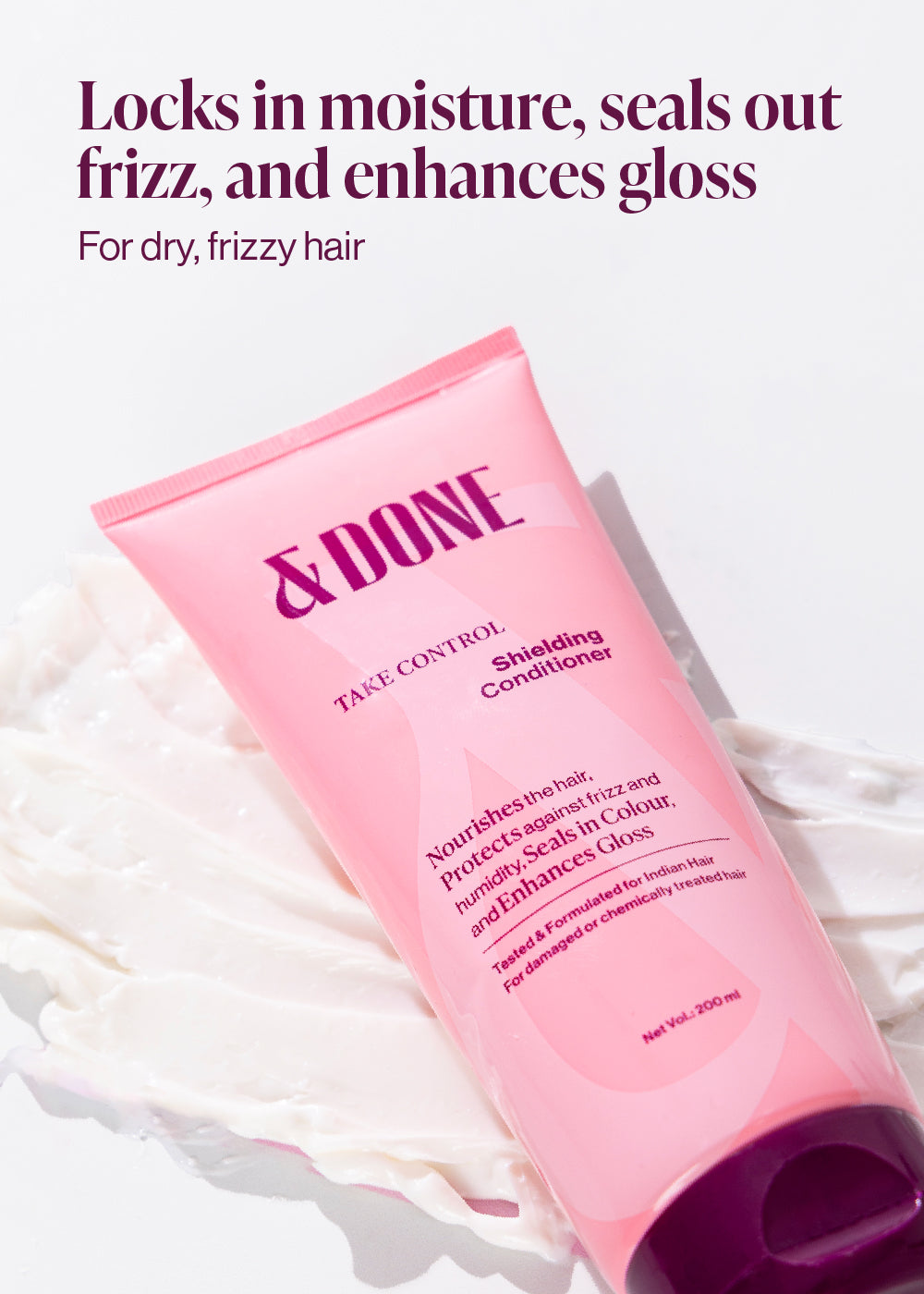
If your shampoo is the cleanse, your conditioner is the seal. Post-wash, the cuticle needs to close back down, and that’s exactly what a well-formulated conditioner does. This step is key to how to protect colored hair, because without sealing the cuticle, moisture and color escape faster.
For colored hair care, your conditioner should:
-
Smooth the cuticle to reduce frizz and dullness
-
Restore moisture to porous strands
-
Strengthen the cortex to reduce breakage
Our hydrating conditioner is built around these three functions simultaneously, not sequentially. The active system works inside and out, addressing porosity and protein loss at the same time. This is especially relevant for Indian hair that deals with layered damage: color on top of heat styling on top of hard water exposure.
What is color treated hair at its core is hair with a more porous, structurally altered fibre that needs targeted repair.
Leave it on for at least 3–5 minutes before rinsing. The actives need time to work.
3. Treat UV and Heat as Real Threats
Most people protect their skin from the sun. Their hair? Not so much.
UV radiation breaks down synthetic dye molecules, which is just a technical way of saying the sun literally bleaches your colour out. Warm tones (reds, coppers, caramels) and lightened hair are especially vulnerable.
To protect your colour from UV:
-
Use a leave-in with UV filters before stepping out
-
Wear a hat or scarf during peak sun hours (10 AM–4 PM)
-
Avoid prolonged sun exposure in the first two weeks after colouring
Heat styling is the second major culprit. Colour-treated hair already has a compromised cuticle, flat irons and blow dryers stress it further.
How to manage heat:
-
Always use a heat protectant before thermal styling, no exceptions
-
Keep flat irons below 180°C (lower for bleached or fine hair)
-
Air-dry to 70–80% before finishing with a blow dryer on medium heat
4. Make a Hair Repair Serum Your Weekly Non-Negotiable
Color processing breaks disulfide bonds inside the hair cortex, the bonds responsible for structural integrity and elasticity. Shampoo and conditioner address the surface. Bond repair requires something that works deeper.
This is where a hair repair serum earns its place. Look for formulations that actually rebuild broken bonds, not just coat the strand with silicones for temporary smoothness. True repair shows up as restored elasticity, reduced breakage, and hair that consistently behaves better over time.
At &DONE, our serum is part of a multi-active system designed to work alongside your wash routine, because integrated care is how you get lasting results, not a one-wash fix.
Use it 1–2 times a week on damp, towel-dried hair. Focus on mid-lengths and ends, they absorb the most damage from both the colouring process and daily wear.
5. Hard Water Is Quietly Killing Your Color
This one doesn't get talked about enough, especially for Indian consumers. The high mineral content in hard water, primarily calcium and magnesium, deposits onto the hair fibre over time.
These mineral deposits make hair feel rough, look dull, and, critically, interfere with color vibrancy by creating a physical barrier over the hair shaft.
What helps:
-
Use a chelating or clarifying wash once a month to remove mineral buildup (follow with an intensive conditioning treatment)
-
Consider a shower filter if your water is particularly hard
-
After swimming in chlorinated pools, rinse hair immediately and use a shampoo and conditioner for dry hair to counteract the stripping effect
6. Lock In Your Color from Day One
The first 48–72 hours after coloring are critical. The cuticle is still partially open, the color molecules are still settling, and anything that stresses the hair during this window accelerates fade.
In the first 72 hours:
-
Avoid washing your hair
-
Don't use heat styling tools
-
Skip the gym (sweat is mildly acidic and can affect freshly deposited color)
-
Use cold or lukewarm water for your first wash, heat opens the cuticle and pushes color out
After this window, your routine, the right hair care products working as a system, is what keeps color vibrant week after week.
The &Done Approach to Colored Hair Care
Generic haircare wasn't designed with Indian hair in mind, and it certainly wasn't designed for color-treated Indian hair facing heat, humidity, hard water, and pollution simultaneously.
Our colour protection products are formulated around one principle: the right actives, in the right ratios, working together. Not one hero ingredient, not a single-concern formula, a multi-active system that addresses the real, layered challenges of colored hair in Indian conditions.
Because hair care for colored hair isn't one tip. It's an integrated approach, and that's exactly what we've built.